





Introduction
Is it illegal to vape in car, or is the concern mostly based on rumours? This question has become increasingly common among drivers who use electronic cigarettes. Some people believe vaping inside private vehicles is perfectly legal. Others worry about fines, passenger exposure, and road safety regulations.
The reality is more complicated. Vaping laws differ between countries, states, and local jurisdictions. In some places, using an electronic cigarette inside a private vehicle is permitted. However, restrictions may apply when children are passengers or when the vehicle belongs to an employer.
Science also provides important reasons to think carefully before vaping inside a car. Electronic cigarettes produce aerosols containing particles and potentially harmful chemicals. Because vehicles have limited interior space, these substances can accumulate.
Understanding the difference between legal restrictions and scientific evidence helps drivers make informed decisions. This guide explores whether it is illegal to vape in car, what research reveals, and how motorists can avoid unnecessary problems.
Is It Illegal to Vape in a Car?
Whether it is illegal to vape in car depends primarily on local legislation. There is no universal law prohibiting vaping inside every private vehicle.
Some governments regulate vaping similarly to traditional tobacco smoking. Others introduce separate restrictions for electronic cigarettes. These differences make checking local regulations particularly important.
For example, certain US states prohibit vaping inside vehicles carrying children. Other jurisdictions focus on workplaces, public transport, and company-owned vehicles.
Therefore, drivers should not assume that vaping is automatically legal everywhere. Equally, they should not believe every country treats private vehicle vaping as an offence.
Understanding Private Vehicle Vaping Laws
Private vehicles generally receive different legal treatment from public transport and workplaces. However, this distinction does not remove every possible restriction.
Some laws specifically cover enclosed vehicles carrying minors. These regulations aim to reduce children’s exposure to tobacco smoke and electronic cigarette aerosols.
Other restrictions may apply when employees use company vehicles. Employers can introduce workplace policies that prohibit smoking and vaping inside their vehicles.
Consequently, understanding local legislation is essential before deciding whether vaping inside a car is permitted.
Can You Vape While Driving?
In some jurisdictions, adults can legally vape while operating their personal vehicles. However, this does not mean every vaping activity is considered safe.
Drivers must maintain proper control of their vehicles. They must also pay attention to traffic conditions and surrounding road users.
Reaching for a vape, adjusting its settings, or searching for replacement cartridges can interfere with driving. These actions may create legal problems if they contribute to unsafe driving behaviour.
Is It Illegal to Vape in Car According to Science?
The legal question is only one part of the discussion. Scientific research also examines the potential effects of vaping inside enclosed vehicles.
Electronic cigarettes heat liquid to produce an aerosol. This aerosol is commonly mistaken for harmless water vapour. However, it can contain nicotine, fine particles, flavouring chemicals, and other substances.
The amount of exposure depends on several factors. These include the device, e-liquid composition, frequency of use, and ventilation.
What Does Science Say About Secondhand Vape Aerosol?
Research indicates that people nearby can inhale aerosol produced by electronic cigarettes. This exposure is particularly relevant inside enclosed spaces.
According to the Environmental Protection Agency, secondhand aerosol may contain nicotine, formaldehyde, and metals. The exact substances and concentrations vary between products and circumstances.
Vehicles provide relatively small indoor environments. Consequently, repeated vaping can affect the air passengers breathe.
This does not mean every vaping session produces identical exposure. Nevertheless, scientific evidence challenges the idea that secondhand vape aerosol is completely harmless.
Can Vape Aerosol Remain Inside a Vehicle?
Vape aerosol does not necessarily disappear immediately after someone exhales. Some particles remain suspended in the air before settling onto surrounding surfaces.
Vehicle seats, carpets, dashboards, and other interior materials can collect residues. This process may contribute to thirdhand exposure.
The Environmental Protection Agency explains that chemicals from electronic cigarettes can settle on indoor surfaces. These residues may create additional exposure opportunities.
Regular vehicle cleaning can help maintain interior hygiene. However, cleaning cannot completely replace avoiding vaping inside enclosed spaces.
Is It Illegal to Vape in Car Because of Distracted Driving?
Distracted driving is another important consideration. Even when vaping itself is permitted, handling a device can affect driving performance.
The National Highway Traffic Safety Administration explains that distracted driving involves activities that divert attention from operating a vehicle.
Its guidance covers visual, manual, and cognitive distractions. These categories help explain why seemingly ordinary activities can become dangerous behind the wheel.
Drivers can explore the official National Highway Traffic Safety Administration — distracted driving guidance for additional information about road safety.
How Does Vaping Distract Drivers?
Using an electronic cigarette may require several physical actions. Drivers sometimes need to reach for devices, remove covers, or adjust power settings.
Looking down at a device takes attention away from the road. Even a short interruption can become dangerous in busy traffic.
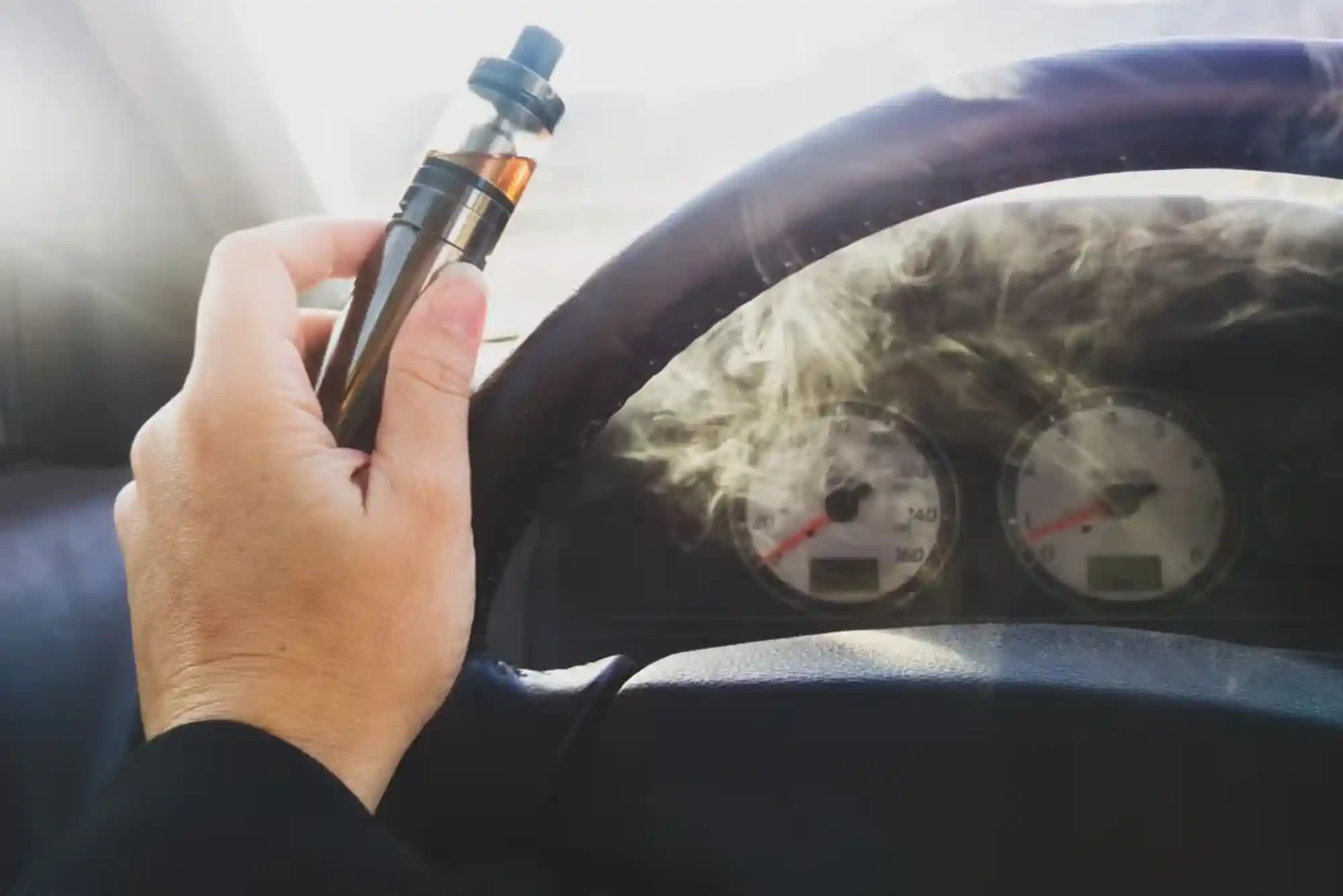
Exhaling thick aerosol can also affect visibility under certain conditions. This is particularly concerning when clouds move towards the windscreen.
For example, imagine approaching a busy intersection while checking your vape battery. A pedestrian or vehicle could enter your path unexpectedly.
Therefore, avoiding vape handling while driving is a sensible safety decision.
Can Vaping Lead to a Careless Driving Charge?
Vaping does not automatically establish careless driving. However, authorities may examine whether a driver’s actions contributed to dangerous behaviour.
For instance, reaching for a vaping device could distract someone before a collision. Depending on local legislation, this behaviour might become relevant during an investigation.
The outcome depends on the circumstances, available evidence, and applicable traffic laws.
Drivers should remember that legal permission to use a device does not remove their responsibility to drive safely.
Is It Illegal to Vape in Car in the United States?
The United States does not have one nationwide prohibition covering every private vehicle. Individual states can introduce their own restrictions.
Some states specifically prohibit vaping when children are present.
For example, Alabama prohibits smoking or vaping inside an enclosed motor vehicle when a child aged 14 or younger is present.
Louisiana also restricts vaping inside vehicles carrying children younger than 13.
These examples demonstrate why checking state legislation is important. Drivers should also verify whether local amendments or additional restrictions apply.
Are Vaping Laws Different Across States?
Yes, vaping regulations can vary considerably across the United States. Some states regulate electronic cigarettes under existing smoke-free legislation.
Others establish separate rules covering private vehicles and minors.
The age limits, enforcement procedures, and penalties may differ. Therefore, drivers should consult official state government resources for accurate information.
Assuming neighbouring states follow identical regulations can lead to misunderstandings.
Is It Illegal to Vape in a Car in the United Kingdom?
UK drivers should understand the difference between private vehicles and workplaces.
There is no general nationwide prohibition specifically banning adults from vaping inside their own private cars. However, restrictions may apply to particular vehicle categories and workplace environments.
For example, employers can establish policies prohibiting vaping inside company vehicles. Certain public transport and enclosed workplace restrictions may also apply.
Drivers must still maintain proper control of their vehicles. If vaping contributes to careless or dangerous driving, relevant road traffic legislation may become applicable.
Checking current government guidance is advisable when travelling or using commercial vehicles.
Is Vaping in a Car Dangerous for Passengers?
Passengers may have limited control over the air inside a vehicle. This makes secondhand aerosol exposure an important consideration.
Children deserve particular protection because they cannot always choose their surroundings. Adults should also consider passengers who prefer avoiding nicotine and other aerosol chemicals.
Does Opening Windows Make Vaping Safe?
Opening vehicle windows can improve ventilation. However, it does not guarantee that passengers avoid exposure.
Air circulation depends on vehicle speed, window positions, ventilation settings, and environmental conditions.
Some aerosol particles may remain inside the cabin despite open windows. Therefore, ventilation should not be considered complete protection.
Avoiding vaping inside the vehicle is the most reliable way to reduce unnecessary exposure.
Can Vaping Affect Children Inside Vehicles?
Children may experience exposure when adults vape nearby. The potential presence of nicotine and other chemicals makes this particularly concerning.
A child sitting in the rear seat cannot necessarily escape the aerosol. Opening a window may also provide limited protection.
Even where local legislation does not prohibit vaping, avoiding it around children remains a responsible choice.
How Can Drivers Avoid Legal and Safety Problems?
Drivers should understand local vaping restrictions before travelling. This becomes especially important when crossing state or national borders.
They should also avoid handling electronic cigarettes while operating vehicles. Checking batteries, adjusting settings, and changing cartridges should happen after parking safely.
Passengers should receive consideration as well. Keeping the cabin free from vape aerosol creates a more comfortable environment.
Drivers using company vehicles should review workplace policies. Rental vehicle users should also check contractual conditions before vaping.
Most importantly, motorists should never confuse legal permission with responsible behaviour. Road safety should always take priority over convenience.
Frequently Asked Questions
Can you get fined for vaping in a car?
Yes, depending on local legislation and circumstances. Some jurisdictions prohibit vaping inside vehicles carrying children. Drivers may also face consequences if vaping contributes to unsafe driving.
Is it illegal to vape while driving in the UK?
There is no general UK-wide ban specifically prohibiting adults from vaping while driving. However, drivers must maintain proper control of their vehicles. Distracting behaviour could result in legal consequences.
Can you vape in a car with children?
Some jurisdictions specifically prohibit this activity. Even where no direct prohibition exists, avoiding vaping around children reduces unnecessary aerosol exposure.
Does vaping in a car leave harmful chemicals?
Vape aerosol can contain nicotine, fine particles, and other chemicals. Some substances may settle on vehicle surfaces. Research also identifies potential concerns about secondhand exposure.
Can police stop you for vaping while driving?
Vaping alone does not automatically justify enforcement everywhere. However, police may investigate unsafe driving, applicable vehicle restrictions, or other traffic offences.
Is vaping in a parked car illegal?
Parking does not automatically remove legal restrictions. Some laws prohibit vaping inside vehicles carrying minors, regardless of whether the vehicle is moving.
Conclusion
So, is it illegal to vape in car, or is the concern simply exaggerated? The answer depends on local laws and driving circumstances.
Vaping inside private vehicles is not automatically illegal everywhere. However, restrictions can apply when children are passengers or particular workplace rules cover the vehicle.
Discover useful information and insights about vaping with VapeZX.com, a dedicated online resource for exploring vape products, industry trends, and vaping guides. Whether readers want to learn about vaping options, understand product features, or stay informed about the latest developments, VapeZX offers helpful information to support a more informed browsing experience.
